For me, it's always been about "the coffee", and that's a great way to go, but it's not just about the customer coming and getting coffee, it's about them having the time to appreciate and understand what they are getting. We're in a hectic world, and as coffee professionals we should change our business model(s) to cultivate an atmosphere that will entice customers to slow down and enjoy.
But how do we convince them that we have something worth taking time for?
How do we approach this idea?
Gone should be the long queues of impatient people wanting to grab their coffee and go. Excellence needs patience. More owners should make the move to focus on the experience of their in house customers rather than focusing on numbers through the door. As long as we cater to impatience, we will never adequately convey what coffee has to offer.
In terms of design, do away with the tacky "coffeeshop" look. No more Starbuckian browns and tans, nor should we be too avant garde with bright neon walls. Simple colors. Clean lines. Refined and/or casual. When the customer opens the door they should know that a different experience awaits them.
It's not just about the customer slowing down and enjoying the coffee, it's about the barista slowing down and enjoying the process of making it. It goes without saying that all drinks, whether coffee or espresso, should be made by the cup.
Think of coffee as a dish, not as merely a beverage. In fact, it's the main dish, and everything that accompanies it is a side item. As such, guests should be seated and put at ease, simple one-sided menus given, options quickly explained, and after a few minutes, orders taken. A lot can change with customer behavior and customer expectations when the standard chalkboard menus and extended queues are a thing of the past.
We need to be cautious about service. Unobtrusive and casual, but providing support and answering questions when necessary. In order to elevate the experience and have the opportunity for the customers to see and appreciate what is happening, this is the direction we need to move.
Tuesday, August 14, 2012
Tuesday, July 31, 2012
Educate and Elevate! The role of the artisan coffee shop
Customer service is about quality and care, not convenience. Customer service is about education, not platitudes. Ultimately, the customer is best served by delivering them the best product possible, and seeking to improve upon both product and experience each day. When you put the coffee first, you put the customer's coffee experience first. Customer service is a coffee first decision.
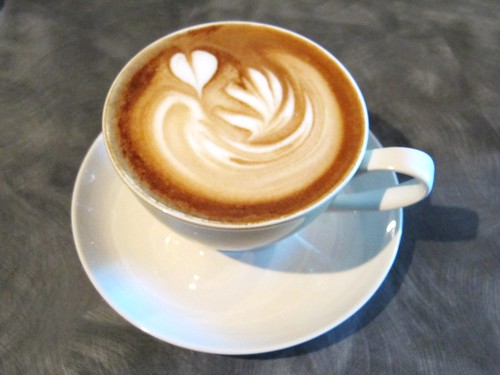
Sadly, there are those who fail to take a leadership role and opt for convenience and platitudes. Theirs is the world of pre-ground coffee and smiles. Of duping the uneducated customer into paying for product that is rapidly declining by the minute. Convenience in order to make a sale is patronizing the customer rather than serving the customer. The best way to serve the customer is to provide them the best tools and education to continue their coffee experience at home. That is why an artisan coffee shop should only sell fresh, properly roasted whole bean.
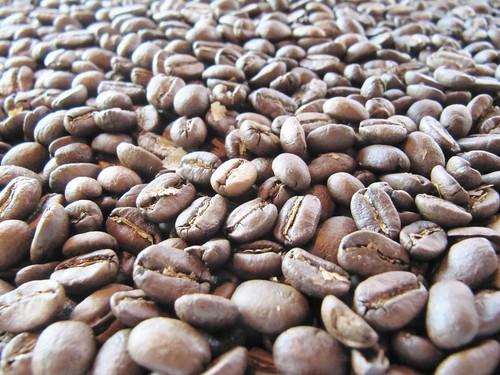
Once you take the role of an artisan coffee maker, excellence is more than a set of words, it's a set of actions. The artisan coffee provider has an obligation beyond the average coffee shop, an obligation to educate the customer to help them elevate their own coffee experience. The customer looks to the coffee shop owner, to the barista for guidance. To outwardly speak of cultivars, sourcing, brew ratios, and craft, and then sell the customer ground coffee demonstrates a pure and calculated facade. When a customer comes to buy coffee to take home, the care for the coffee does not end in the coffee shop, it begins at the grinder in the customer's home.

Wednesday, February 15, 2012
The right mindset will take you far
When you are starting your coffee business, the mindset you have will determine your path down the line.
Be like the Samurai warrior.
Develop your skills through discipline and training.
Understand the battlefield.
Strategize.
Implement your plan of attack.
Strengthen your core to counter any opposition.
Master your skills through continued discipline and training.
Be like the Samurai warrior.
Develop your skills through discipline and training.
Understand the battlefield.
Strategize.
Implement your plan of attack.
Strengthen your core to counter any opposition.
Master your skills through continued discipline and training.
Saturday, February 11, 2012
Add Excitement to Your Roasting!

For many roasters out there, roasting is a routine. There are different philosophies when it comes to sourcing, blending, and roasting espresso. The problem is: the same roaster producing the same espresso every day is monumentally boring.
What I wonder is: Why don't more roaster/retailers adopt the multiple espresso model? I know there are some that have gone the Experimental espresso route for a time, and some are actually doing it quietly without making a stir... ala the ever changing "Black Cat Project". So I'm not talking about whole bean you put on the shelves for your customers, or what craziness you dare to do for the online coffee consumer. I'm talking about what you're serving in your coffee shops on a daily basis.
Now there are several new shops that have opened in the past few years who promote the multiple roaster model. They realized that they wanted to offer their customers the best that various roasters had to offer, so they could experience a variety of interpretations of espresso. But there is a commonality - All the espresso is pretty damn good!
I understand there's a marketing component that's in here. "We found a profile that is great, our customers love it, we sell a boat load..." And to that I say, get your game face on and take the ball to the rack! Yea, I know you can do an awesome windmill dunk every time, but how about through the legs and behind the back? Or how about behind the back and blindfolded? We know you have the skills. So bring it!
Do roasters need to abandon their long standing espresso in their own shops? No, of course not. But if your vision of espresso never changes, are you growing as a roaster, and if not, that's kind of sad. Of course a roaster might bust out something new a few times... and then a few more, and maybe there will be new espresso on a regular basis. Maybe bi-weekly. Maybe even weekly.
I've done both. I've stayed with a general flavor profile, and rocked that for a while. It was good. It was very good. And it was also very boring. The notion that it's more difficult is simply not so. Manipulating an El Salvador and a Nicaragua to taste like a Brazil and a Guatemala to taste like a Sumatra isn't a display of amazing roasting skill. Note that the chocolate/berry/hint of nut sweetness espresso, whatever variation, is not that difficult to duplicate. And is it exactly the same every time? Well.... not really. And since we know there are variations, both slight and obvious due to crop availability, seasonality, and a whole host of other reasons. Why not source the best ingredients (coffee) that you can, relative to the season, and present your customers with the best espresso you can make from those ingredients. A great chef doesn't try to make steak taste like lamb, or make every tart, even the lemon tarts, taste like chocolate.
From my personal experience, I contend that roasters will learn more about coffees that do work together as espresso by trying all those coffees that you shouldn't -- washed Centrals, bright Africans etc. And you will surprise yourself. "What the hell... I never thought THAT would work!" So fellow roasters, especially those of you who know you can, don't just think about doing it, try roasting something new today. You might find that what was once routine has now become exciting.
Wednesday, September 07, 2011
Improving Clarity
When it comes to coffee and espresso, clarity is important. We've had the same filtration system since we opened, and it's time to improve it. I've been wanting to upgrade our water filtration for a while now. I've ordered two Everpure Claris filter systems.
It is an adjustable filtration media that includes a five stage process for eliminating scale, dirt and fine particulates, odors/off flavors. I believe that for the money and simplicity it's the best system out there.

The Claris uses a Hydrogen (H+) ion exchange rather than a Sodium (Na+)exchange.
"The Claris resin is loaded with hydrogen (H+). The hydrogen ions dissolve the carbonates (CO32- and HCO32-) , and the resin then removes the calcium and magnesium ions (Ca2+ and Mg2+). This process also lowers the pH."
I will soon find out how it tastes.
It is an adjustable filtration media that includes a five stage process for eliminating scale, dirt and fine particulates, odors/off flavors. I believe that for the money and simplicity it's the best system out there.
The Claris uses a Hydrogen (H+) ion exchange rather than a Sodium (Na+)exchange.
"The Claris resin is loaded with hydrogen (H+). The hydrogen ions dissolve the carbonates (CO32- and HCO32-) , and the resin then removes the calcium and magnesium ions (Ca2+ and Mg2+). This process also lowers the pH."
I will soon find out how it tastes.
Saturday, September 03, 2011
A Continuous Journey
I started roasting in 2005 on a little one and a half kilo roaster from Korea.
The IMEX Digirosto 1500.

It came with three main profiles, each which had a multitude of roast levels -- about three or four, were actually useful. In addition, it could entirely manual as well. For me, it was about setting the profile to what I wanted, and controlling the beginning and the end of the roast. If the roaster did it's job during the bulk of the roast, the results would be good. Great in fact. Now I might have skipped over the 40 to 60 pounds of charred, unusable, and just plain wrong batches that I slogged through. But it forced me to understand the balance between technology and craft, between science and art.
You can poke your finger and it won't hurt a bit, but that's if you poke it with a marshmallow. Poke it with a pin, it might be a little uncomfortable, but you'll draw blood.
Understand the tool you are using, but more important, produce results.
In late 2007, I had the opportunity to install another roaster. Because there is no need for venting, and the technology intrigued me, I knew that the best roaster for my needs would be the one from Fresh Roast Systems.

This roaster is precision quantified.
Made primarily for use in large high-end markets where venting is not possible, I was one of the first small roaster-retailers able to use one.
And like anything else, it's a tool.
While it's initially simplistic in it's operation, it's nothing but simplistic.
I could now roast with much greater precision. Airflow. Drum speed. Drum charge temp. Roast start temp. Roast finish Temp. All comprised within the Roasting Profile to the second. What you have to remove is your ego. Understand that those things that you think you are detecting, you're not. How to blend, how to change a roast, that's mostly art. The process itself is more science than art. As art it's more intuition than definition.
Understand the capabilities of the tool. Use it to its potential.
As a roaster, it involves no less thorough study.

But with greater capability for precision there was a need for greater investigation in profiling. Peaberry, Pacamara, SHB, Medium-soft Brazils, Wet Processed, Dry Processed... and any other permutation and combination of cultivar and processing method.

There's always more to learn, and it's that continuous thirst for zeroing in on what's important and discarding the tasteless overly intellectual pablum that keeps me moving forward.
In the end, the results are in the cup.

And the journey will continue.
The IMEX Digirosto 1500.
It came with three main profiles, each which had a multitude of roast levels -- about three or four, were actually useful. In addition, it could entirely manual as well. For me, it was about setting the profile to what I wanted, and controlling the beginning and the end of the roast. If the roaster did it's job during the bulk of the roast, the results would be good. Great in fact. Now I might have skipped over the 40 to 60 pounds of charred, unusable, and just plain wrong batches that I slogged through. But it forced me to understand the balance between technology and craft, between science and art.
You can poke your finger and it won't hurt a bit, but that's if you poke it with a marshmallow. Poke it with a pin, it might be a little uncomfortable, but you'll draw blood.
Understand the tool you are using, but more important, produce results.
In late 2007, I had the opportunity to install another roaster. Because there is no need for venting, and the technology intrigued me, I knew that the best roaster for my needs would be the one from Fresh Roast Systems.
This roaster is precision quantified.
Made primarily for use in large high-end markets where venting is not possible, I was one of the first small roaster-retailers able to use one.
And like anything else, it's a tool.
While it's initially simplistic in it's operation, it's nothing but simplistic.
I could now roast with much greater precision. Airflow. Drum speed. Drum charge temp. Roast start temp. Roast finish Temp. All comprised within the Roasting Profile to the second. What you have to remove is your ego. Understand that those things that you think you are detecting, you're not. How to blend, how to change a roast, that's mostly art. The process itself is more science than art. As art it's more intuition than definition.
Understand the capabilities of the tool. Use it to its potential.
As a roaster, it involves no less thorough study.
But with greater capability for precision there was a need for greater investigation in profiling. Peaberry, Pacamara, SHB, Medium-soft Brazils, Wet Processed, Dry Processed... and any other permutation and combination of cultivar and processing method.
There's always more to learn, and it's that continuous thirst for zeroing in on what's important and discarding the tasteless overly intellectual pablum that keeps me moving forward.
In the end, the results are in the cup.
And the journey will continue.
Wednesday, August 31, 2011
Espresso: Too soon is never "too soon"
Sometimes espresso is too fresh to use. But there are times when I need to pull shots sooner than expected. I usually wait several days after roasting before testing my espresso, but since we we're sold out on whole bean espresso, I needed to test a couple days earlier than usual.
At altitude espresso acts differently than at a lower elevation. What might be good at three to five days rest near the coast might need closer to seven days at altitude. So testing at less than 48 hours here involves some forecasting and manipulation.
I grind on the ultrafine end of espressodom, and knowing my components, I say 17 grams. Now keep in mind I'm just looking for tasting notes, not perfection at this point.
I pull the first shot and the crema is outrageously wild.
I tighten the grind a little more.
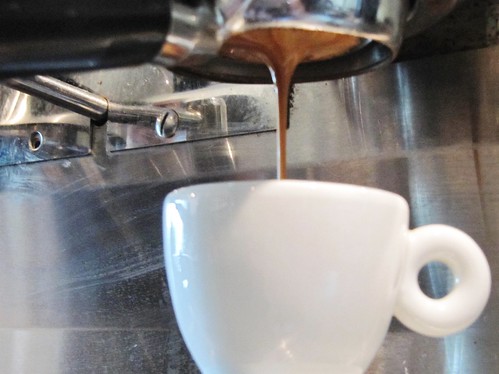
The crema is manageable and the aromatics are off the charts. Smell. Sip. Pause while my brain runs through my limited tasting vocabulary. Sip. Develop a mental tasting picture of the espresso. Finish. Ponder.
Now I stop pondering to think, and as I ponder my thoughts, I
Name it. Write it. Bag it.
Done.
"Soul Finger" -
This jazzy cacophony of flavors will leave you shouting joyously to the open ears of frantic handless pantomimes.
This three bean blend brings coffees from Sumatra Mandheling, Ethiopia Guji Quto Suke and a wonderful coffee from San Martin de Leon Cortes.
In the cup it's rhythmic raspberry and stone fruit with a punctuated praline-toffee sweetness. Recommend: 198.5 – 199F, 17g, 28 S.
And it tastes exactly like it sounds.
This will be something special.
At altitude espresso acts differently than at a lower elevation. What might be good at three to five days rest near the coast might need closer to seven days at altitude. So testing at less than 48 hours here involves some forecasting and manipulation.
I grind on the ultrafine end of espressodom, and knowing my components, I say 17 grams. Now keep in mind I'm just looking for tasting notes, not perfection at this point.
I pull the first shot and the crema is outrageously wild.
I tighten the grind a little more.
The crema is manageable and the aromatics are off the charts. Smell. Sip. Pause while my brain runs through my limited tasting vocabulary. Sip. Develop a mental tasting picture of the espresso. Finish. Ponder.
Now I stop pondering to think, and as I ponder my thoughts, I
Name it. Write it. Bag it.
Done.
"Soul Finger" -
This jazzy cacophony of flavors will leave you shouting joyously to the open ears of frantic handless pantomimes.
This three bean blend brings coffees from Sumatra Mandheling, Ethiopia Guji Quto Suke and a wonderful coffee from San Martin de Leon Cortes.
In the cup it's rhythmic raspberry and stone fruit with a punctuated praline-toffee sweetness. Recommend: 198.5 – 199F, 17g, 28 S.
And it tastes exactly like it sounds.
This will be something special.
Subscribe to:
Posts (Atom)