When I first started to explore the world of Specialty Coffee in the
early 2000's, and we started visiting the places everyone considered to
be the best roasters, coffee shops, and purveyors of espresso, I was
delighted, and fascinated. And through it all, I had one mindset.
Whatever they were doing, whatever level of sublime tastiness they had achieved, whatever level of mastery they were showing in their craft -- whatever it was had already been done. That meant it was possible. And because I knew it was possible, and that someone had already been doing it at that level, then that was my minimum standard.
My minimum standard, my starting point for coffee excellence was
measured by what the best of the best were doing. And until what I was
doing was on par, or better than what they were doing, it never saw the
light of day. Whether it was learning how to roast or understanding that
siphon brewing has everything to do with philosophy first, technique
second.
There's always someone who will be doing something great. And to whoever you are, I applaud your genius. Thank you for showing me that, now I'm going to do it better.
That's my mindset.
Showing posts with label single origin. Show all posts
Friday, April 28, 2017
Monday, January 30, 2017
The Ethics of Being an Artisan
I posed the following in an Instagram post, but I will explore it further here.
Fact: Ground coffee begins losing flavors and aromatics immediately after grinding and with every passing second.
Let's think about this. If you are an artisan (craft, small-batch, third wave, progressive, high-end, etc.) coffee shop and you sell your coffee for $30 lb, you certainly can't charge the same for pre-ground coffee. [Now, of course this is hypothetical because we all know there aren't any high-end coffee shops that sell pre-ground coffee.]
The value of the pre-ground coffee would decline by the hour, by the minute, by the second. What are we looking at? Thirty hours? Thirty minutes? Thirty seconds until the relative value of that coffee is zero? Remember, the baseline is the whole bean, so you are not comparing it to other coffees, you are comparing it to itself. If you are selling single origin, small farm coffee for the reasons a coffee shop or roaster sells that quality of product, then by all measures, isn't the value approaching zero as soon as the bag lands on the shelf? Even if it were ground on the spot, the relative value would essentially be zero when it reached the customer's home.
It's your job as a seller of artisan goods to educate your customers, it's not on the customer to come to you already educated. Selling high-end ingredients assumes that you are not trying to sell to everyone, but rather you welcome everyone who is looking for something better.
The science is clear. It comes down to words many are afraid to use, and fewer actually embody. Ethics. Principles. Do you have them or not? Once you ask to be recognized as being at a higher standard, you have to operate at - and be held to - a higher standard. And as a practical matter, since everything you are brewing is by the cup, why would you have bulk grinders anyway?
I originally posted this article on LinkedIn
Monday, January 02, 2017
My Conversations with Coffee
When I started roasting a little more
than eleven years ago, I knew that it would take some time for the
coffee and me to speak the same language. There were secrets. Lots of
secrets. And if I didn't become coffee's friend first, I knew that
getting it to reveal its secrets would be difficult. So I took it
slow.
I had a conversation with the coffee.
We got to know each other, and slowly but surely, the coffee had
something to say. The coffee gave me a little insight on how our
conversations were going. I paid attention to what the coffee was
telling me. And I knew I could improve our relationship by listening
carefully, by learning about where the coffee came from, and what
made the coffee I spoke with a little bit different. Sure there are
similarities between coffees, but learning about what makes each coffee unique is where the best relationships are formed.
And after carefully listening,
writing and reflecting upon our conversations together in my journal,
I began to understand what the coffee wanted to tell me. I knew a
trust had developed and the coffee was ready to share its innermost
thoughts.
Coffee can be brooding and
contemplative, it can also be lively and jubilant. Sometimes coffee
has a few simple ideas to share, but it's very clear in its
statements. Other times, coffee speaks poetically and whispers
softly in your waking dreams – playing the part of both devil and
angel and telling you about things you never thought possible. And
then, it will reveal its soul. These are the mysteries that must be
cherished.
Coffee can be your friend. You can't
force the coffee to be your friend. You can't bribe the coffee with
shiny equipment and expect it to tell you everything. If you treat
coffee harshly it will be bitterly disappointed. And if you try to
move the relationship too fast, the coffee will laugh at you. But if
you treat the coffee with respect, and you take the time to listen to
the coffee, then maybe the coffee will share secrets with you too.
Tuesday, October 11, 2016
Espresso Blending: Insights and Innovation
Coffee is roasted. Coffee has an
initial “de-gassing” and then coffee is ready to consume. That's
the basics in layman's terms.
Here are some thoughts I have been exploring:
Different coffees are ready after a different amount of days, and furthermore, different coffees (in terms of realized flavor extraction) age differently. That being the case, it would make sense to construct your espresso blends to reflect this. So if you have a Sumatran coffee that takes 5 days to degas and a Guatemalan that takes 2 days, and an Ethiopian that takes 1 day, then if you roasted the Sumatra on Sunday, you would roast the Guatemala on Wednesday, and the Ethiopia on Thursday. By doing this, all the coffees are “ready” at the same time.
The second factor would be the
longevity of said coffees flavor nuances. Now we know about coffee
being good for X days from roasting, but in terms of realized flavor
extraction of various beans at different roast profiles there is a
window of useability for espresso that may or may not
correlate with the specifics we find for brewed coffee. Yes, it may
be a plus or minus shift of a day or two, so it is worth considering.
This is not detailed by any means, but
it's something to get you to think a little bit. As a practice, it's
certainly not a a simplistic one. You need to consider other
factors, like: Does the flavor intensify over the useable time, and
then drop off like a Dry Processed Ethiopian or does it peak from
days 6-10 like a Central American coffee? What about percentages in a
blend? How does roast level affect flavor nuance and stability? Then
you correlate those factors to the initial degassing time and come up
with a new set of variables. This is a simplistic look at some of the
little discussed factors involved with maximizing the flavor
potential in your espresso, and it is something I would suggest thinking
about if you want to improve your craft.
If you think about these kinds of things when you are roasting and blending, and would like to have a discussion, share your thoughts with me @ caffedbolla AT Yahoo DOT com.
Happy roasting!
Monday, September 19, 2016
Single Origin Espresso: How to create a multidimensional experience
Crafting a great single origin espresso
should be approached the same was as you would in creating any other
delicious espresso. Separate roasts. Separate profiles. Separate
flavors. And then a wonderful espresso.
Espresso is not a tiny cup of coffee.
It should not feel like a “tiny cup of coffee”when you drink it.
Espresso has a density, intensity, and viscosity (mouthfeel). Whether
it's floral and light stone fruit or dense chocolate and dark berry,
espresso should still have a definite mouthfeel and density. Properly
roasted and executed espresso has a density that supports and
balances the clarity. Creating density enhances the clarity, it does
not take away from it. Espresso that is thin and bright without the
proper amount of sweetness and texture is simply an unbalanced
espresso. Bracing flavor notes are not progressive, they are merely a
sign of an underdeveloped or improperly developed roast.
Every coffee (probably) can be used in
espresso, but not every coffee can be used as espresso. Sometimes the
flavors developed in a particular coffee are too intense as an
espresso. But those same notes will often be a wonderful supporting
note or highlight if the proper balance is achieved in a simple two
or three bean blend.
Ok. That's all fine and dandy, but how
does one properly execute a single origin espresso?
There are a handful of coffees that are
amazing out of the gate single origin, single roast espresso. Many of
these can be improved by profile layering, but it's really not
necessary. That being said, the issues are rarely with the coffee,
rather they are a result of poor execution of said coffee as a single
origin espresso.
When a coffee has great flavors at
City, City+, Full City, and Full City+, why ignore that potential
complexity by utilizing a single roast? Multiple layers of flavor and
an unmistakeable textural mouthfeel are what makes an espresso come
alive.
It's not always about choosing light
and medium or light and dark. Sometimes, it is about small
differences within a certain darkness (City+ for example) of roast,
but differing profiles. One roast might be more nut forward, one more
fruit forward, and one more balanced. Not only should you think like
a skilled chef or a world-class mixologist and weave layers within
layers, you should take the same time to develop your craft as they
did to develop theirs.
You can choose simplicity or
complexity, but even within simplicity, there are supporting areas of
sweet, savory or umami that give dimension to the espresso. To truly
understand the flavor potential you need to explore the range of
possibilities at your fingertips. There are as many ways to construct
your espresso with a single bean as there are with two or three.
Simplicity is not about taking shortcuts, simplicity is a focused
exploration of what's in front of you.
Tuesday, August 23, 2016
caffe d'bolla is twelve - Thank You!
Twelve years ago, Yiching and I officially opened our doors at caffe d'bolla. As all new businesses, we used a combination of determination and ingenuity to get everything off the ground. From traveling to trade shows, listening to as many presentations as we could, and taking furious notes to filling a trailer with all of our equipment – including a full size commercial refrigerator we squeezed through a hole in the drywall that would be a future door, turned on its side and rolled it on pipes before setting it in place, to working into the wee hours of the night so we could get everything right.
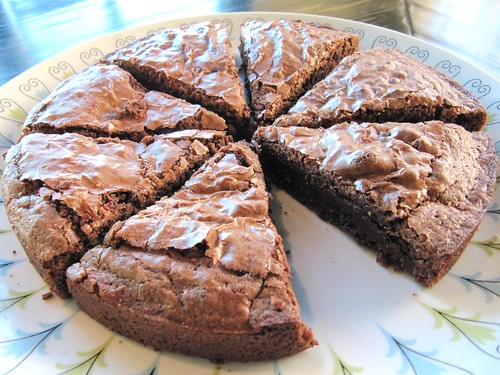
Over the years, our hours have changed a little, and we have done a couple of remodels to the store, but one thing that has never changed is how much we love our shop and seeing smiles on customer's faces as they take their first sip. And although you may not see Yiching in the shop [much these days], she continues to bake our treats daily - from muffins to her perfect brownies, and she maintains our online presence (especially all the good pictures), and coordinates our overseas ordering and imports. This is all because more than two and a half years ago, our son Alex was born, and after an early introduction to coffee and espresso, he is now busy at home with Yiching learning all the things a curious and energetic boy should.
As the years go by, I know that Alex will learn how to pull the perfect espresso and brew siphon coffee to our standards. Maybe it will be you (yes, YOU) who tastes his first drink. Stay tuned for our celebratory "Thank You!" It's going to be another fantastic year!
We spent every day in our shop together, taking turns running errands or having something to eat. We learned about the continuous discovery that is espresso, and latte art (which Yiching has always been better at), and I learned the craft of roasting so I could share something wonderful with our customers.
Over the years, our hours have changed a little, and we have done a couple of remodels to the store, but one thing that has never changed is how much we love our shop and seeing smiles on customer's faces as they take their first sip. And although you may not see Yiching in the shop [much these days], she continues to bake our treats daily - from muffins to her perfect brownies, and she maintains our online presence (especially all the good pictures), and coordinates our overseas ordering and imports. This is all because more than two and a half years ago, our son Alex was born, and after an early introduction to coffee and espresso, he is now busy at home with Yiching learning all the things a curious and energetic boy should.
As the years go by, I know that Alex will learn how to pull the perfect espresso and brew siphon coffee to our standards. Maybe it will be you (yes, YOU) who tastes his first drink. Stay tuned for our celebratory "Thank You!" It's going to be another fantastic year!
Tuesday, May 10, 2016
The Americano: the barometer for judging any coffee shop or espresso bar
An artisan coffee shop or espresso bar should be able execute an exceptional Americano. And if not, can they execute anything properly?
You think it would just be all about the espresso, and it is -- to a point. I've known top-notch places that have great espresso, and fail miserably when it comes time to make an Americano. A failed Americano is the result of either improperly roasted espresso, under or over-extracted espresso, bad drink building basics, non-caring barista (it's not a sexy drink), non-caring ownership, or all the above. The Americano is a foundation drink. There are no excuses for poor execution.
The Americano, the quicker, fresher
alternative to batch-brewed coffee is a drink that should be easy to
execute, and reveals what standards a coffee shop or espresso bar
actually has as compared to those that they claim to have. The recipe is simple: espresso brewed directly into the
hot water, which is already residing in the cup.
“What about espresso first, and then
add water?” No.
“Or maybe pull shots into shot
glasses or some funky pitcher looking thingamajig and then pour over
the water?” Again, that would be a “No.”
But for the Americano to work, your water should never be hotter than your espresso. Water temperature, relative to brew temperature, altitude, etc. should be as high as 165 F (74 C) or less (ours is at 156 F) for the best results. Once the espresso exits the group head, it has already dropped several degrees by the time it hits the water. Another thing is - your espresso, and the resultant Americano needs to have body and texture. The proper amount of lipids and oils are necessary for good crema density, texture, and mouthfeel. Without them, result is the same as a weakly brewed cup of coffee. A thin, watery, espresso-like concoction is not an Americano. It's just a bad drink.
There are many new places that have
come about in recent years - both in our fair city, and across the globe, and the Americano, much like the Emperor's new clothes, reveals all -- and it
isn't pretty.
So for all you current and prospective
shop owners, barista, and coffee-beverage lovers of all types – If
you can't make a tasty Americano, an honest to goodness “That's
good!” Americano, then you might want to examine everything you are
doing. Yep, it's that important.
Monday, April 11, 2016
caffe d'bolla. Gesha. Siphon.
After brewing somewhere north of ten
thousand cups of coffee on the siphon, it's rare that I come across a
coffee that separates itself so far from the others that the words
“excellent,” “outstanding,” or “superb” simply do not
communicate the brilliance of the coffee. This is one such coffee.
This is a Gesha from Acatenango in
Guatemala. It is one of the two most complex coffees I have ever
tasted. The other, a Gesha from the heralded Finca Esmeralda in
Panama. Both are coffees that I roasted. These are two iterations of
the same magical cultivar with differences arising from terroir and
microclimate. With the Panama, and now, some five thousand or so cups
later with the Guatemala, all I can say is “wow!”
Let me start by saying that this is not about experiencing one sensational coffee. It's like experiencing three distinctly different sensational coffees in one cup.
Once your coffee is poured, you will
want to wait a good nine minutes to begin your journey. The first
part of the cup greets you with complex floral notes from hibiscus,
jasmine, rose, and lavender. A touch of peach blossom tea makes an
appearance, and all the floral notes are interspersed with flavors of
pomelo, pink grapefruit, and mandarin. A different set of flavor
combinations in every sip, with a buttery mouthfeel elevating the
experience.
A great siphon coffee, especially the
Gesha, is about pacing. After an additional five to eight minutes of cooling,
a juicy fruit punch and ripe berry note emerges for a few sips, with
a silky essence caressing your tongue like an passionate lover, and
leaving you with a warm, satisfied smile.
After another five minutes to eight minutes -- being wiser to opt for
the latter, sweet cream
and berries linger on your palate with a touch of assam tea and a
hint of lemon-honey. And a hint of cocoa lingers on your palate if you
wait for it. A little more patience, and you will be rewarded
with the comforting essence of warm butterscotch sweetness in the
final sips.
This is a journey worth savoring, and
should take you thirty-five to forty-five minutes once the coffee touches your
cup. Use your time well, and you will be rewarded.
The Acatenango Gesha will be offered on
siphon starting on April 12th for about two weeks. We will
offer an additional run before the end of May.
Labels:
artisan coffee,
caffe d'bolla,
coffee,
coffee roaster,
coffee shop,
consultant,
consulting,
espresso,
gesha coffee,
John Piquet,
roaster,
Salt Lake City,
single origin,
siphon
Location:
Salt Lake City, UT, USA
Saturday, October 24, 2015
Espresso: Building a Foundation
Roasting as a professional is a craft I do my best to approach in a thoughtful manner. There are too few coffee roasters who approach from the perspective of: skill+knowledge+time = craft development. Most roasters seem to approach from the perspective of : green coffee+heat+time = brown coffee. brown coffee = "I am a roaster!" This distorted perception is not a reality, and is one of the most deceptive practices perpetuated throughout our industry.
I've been roasting for ten years now, and although we are a small roaster, we roast 40 or more different espresso every year, all consisting of usually 2-3 coffees, and we never repeat a blend. This is in conjunction with roasting about 50-60 strictly SO coffees throughout the year for whole bean and siphon coffee at our shop.
Many customers have said there is something unique to our espresso that they don't experience anywhere else, and I think that's true for every roaster who has found their voice and wants to communicate something to their customers. Espresso has a language of its own, it speaks to your senses and it speaks to your heart, but it has to start somewhere.
What coffees? What percentages? What
profiles?
Those are all good questions.
The higher quality your green, the
greater ability you have to construct a great espresso blend from a
few components. I personally like blends more than SO espresso for
two reasons, 1) not every coffee works as an espresso and 2) you will
run out of said coffee too fast. As I mentioned before, I prefer
using two or three component coffees for our espresso, more coffees
than that and they start to get lost in the mix.
We do not use filler or commodity coffees for our
espresso. All coffee we roast is above Specialty Grade, so as components they
each have a wealth of complexity to draw on. I start with two
different premises, one is a base component with highlights or accent
notes from one or two other coffees. And the other is from a synergestic perspective of the component beans coming together to create a flavor (or flavors) greater than those of the individual beans.
Having a base coffee does not necessarily mean that will be the highest percentage in a blend, but it does mean that particular coffee will have the most dominant flavor. The greater familiarity you have with each coffee and how their flavors manifest in the espresso extraction process, the greater chance you have of creating a wonderful espresso blend.
This is how I would advise a new
roaster to begin the active process of creating a great espresso blend: Start
with five, ten, or twenty coffees. Roast, brew as coffee, and taste. Take notes. Now
brew each coffee as an espresso and compare the differences in
specific flavors to those from your coffee notes, paying close attention to which flavors have intensified from the espresso extraction method. This way you can understand how the
extraction process changes, highlights, and reveals those unique
characteristics. This is a starting point. Repeat the process
for those same coffees with a different profile. Do this again and
again and again until you have a feel for how each new coffee will
act as an espresso.
Always roast components separately.
You will want to understand the
tendencies of different bean densities and how they work together.
What about SHB, maybe soft beans or Pacamara or Margogype, or
peaberry? How does an Ethiopian peaberry roast compared to a Central
American peaberry, and how do each work as a component of espresso?
Continue building your knowledge base, know what profiles work best
with what coffees, know how profiles should change for a Central
American paired with a Brazilian vs one paired with a dry-processed
Ethiopian.
Begin blending those coffees. If you
started with twenty coffees, that will give you 380 two bean blend
permutations and 6,840 three bean blend combinations. And quite a bit
more once you factor in the varying percentage possibilities. That's
a lot of tasting!
Do this for the next twenty coffees, and so on and so forth. Again. And again. And. Again.
After thousands of tastings, notes, profiles, and blend possibilities you will have a firm grasp of the basics. Now, with a solid foundation, you are ready to begin.
With each new roast, I seek to learn something new, and develop my craft. I hope you will do the same.
Happy roasting!
Thursday, June 11, 2015
Ideas shared, nurtured, and cultivated grow into dreams realized
It was an early summer evening in 2001, Yiching called me and said, "I think we should start our own (coffee/tea) business."
I was making the bulk of my income delivering pizza at the time, "Let me run some numbers," I replied. I spent the next several hours driving around, furiously jotting down notes and figures on a stack of napkins, until I eventually called her back.
"We can do it." I said. The napkin never lies.
And at that moment, we forever changed our lives.
| From an early feature on caffe d'bolla |
A seminar or two from the Small Business Development Center. Determining how to best fund our venture. Two years of traveling to CoffeeFest, and the SCAA with each of us taking different sets of classes with reams of notes, and figuring out by the following year what was and was not relevant to us. This was followed by months of hitting numerous coffee shops and espresso bars locally, in the Pacific Northwest, and overseas, where we quickly developed an understanding of why that first sip is so important.
We also sought out those owners who were doing something special and did our best to pick their brains with what limited understanding we had at that time. Sprinkled in the midst of it all was an on-going search for wares and ceramics, as well as eighteen months of location searching and lease negotiations until we found the right spot. Design decisions, planning, re-drawing, and more planning. Menu development, espresso testing, and a whole host of other decisions made on the fly, which was only possible because of our extensive research and planning. And that barely scratched the surface of what happened.
The beginning comes and goes so fast that you barely have time to appreciate it. There were many relationships being built behind the scenes, most which we still maintain today. It was a time of discovery and a time of challenges, but soon a greater challenge loomed ahead. There came a day for both of us, in the early summer of 2004, when we said goodbye to the our former lives, unlocked our doors and pulled the string on the OPEN sign for the first time.
| caffe d'bolla first year store front |
When I look back to how this all started as an idea some fourteen years ago, just a few short months after we were married. I am most proud of the support and belief we had in each other so early in our lives to know that together, we could accomplish anything.
![]() |
| Best of State 2015, our third straight. |
And as soon as Alex learns how to pull shots, we can think about our next adventure.
![]() |
| Alex, Yiching, and me. Kansai, Japan 2015. |
Friday, January 04, 2013
Coffee and Inspiration
We have hundreds of amazing customers who come for our espresso and coffee, and each one is met with a cheerful, "Hello" from my wife, Yiching. She knows most everyone by name, and always remembers their drinks.
She catches the eyes and stomachs of many who come in with her cakes, brownies, muffins, and cookies, which she bakes daily.
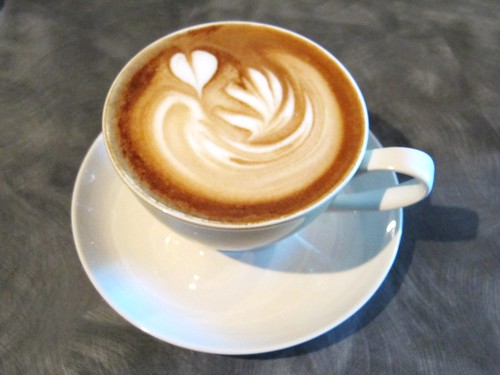
She helps me identify flavors in all of our espresso. She takes the simple and makes it beautiful, whether it's with an addition to our china and ceramics or her latte art. She consistently makes the best cappuccino around, and always gets a smile when she tells our customers it's because she makes them "with love".
So every time you taste an espresso, enjoy a siphon, or wonder why the coffee you take home is so good, thank Yiching. She is the reason I am inspired to create something wonderful.
She catches the eyes and stomachs of many who come in with her cakes, brownies, muffins, and cookies, which she bakes daily.
She helps me identify flavors in all of our espresso. She takes the simple and makes it beautiful, whether it's with an addition to our china and ceramics or her latte art. She consistently makes the best cappuccino around, and always gets a smile when she tells our customers it's because she makes them "with love".
So every time you taste an espresso, enjoy a siphon, or wonder why the coffee you take home is so good, thank Yiching. She is the reason I am inspired to create something wonderful.
Thursday, September 27, 2012
Teacher. Leader. Friend.
Masterful disguise
Buddha wrapped in a fur cloak
Your new path begins.
Buddha wrapped in a fur cloak
Your new path begins.
Tuesday, August 14, 2012
A new model for new expectations in coffee
For me, it's always been about "the coffee", and that's a great way to go, but it's not just about the customer coming and getting coffee, it's about them having the time to appreciate and understand what they are getting. We're in a hectic world, and as coffee professionals we should change our business model(s) to cultivate an atmosphere that will entice customers to slow down and enjoy.
But how do we convince them that we have something worth taking time for?
How do we approach this idea?
Gone should be the long queues of impatient people wanting to grab their coffee and go. Excellence needs patience. More owners should make the move to focus on the experience of their in house customers rather than focusing on numbers through the door. As long as we cater to impatience, we will never adequately convey what coffee has to offer.
In terms of design, do away with the tacky "coffeeshop" look. No more Starbuckian browns and tans, nor should we be too avant garde with bright neon walls. Simple colors. Clean lines. Refined and/or casual. When the customer opens the door they should know that a different experience awaits them.
It's not just about the customer slowing down and enjoying the coffee, it's about the barista slowing down and enjoying the process of making it. It goes without saying that all drinks, whether coffee or espresso, should be made by the cup.
Think of coffee as a dish, not as merely a beverage. In fact, it's the main dish, and everything that accompanies it is a side item. As such, guests should be seated and put at ease, simple one-sided menus given, options quickly explained, and after a few minutes, orders taken. A lot can change with customer behavior and customer expectations when the standard chalkboard menus and extended queues are a thing of the past.
We need to be cautious about service. Unobtrusive and casual, but providing support and answering questions when necessary. In order to elevate the experience and have the opportunity for the customers to see and appreciate what is happening, this is the direction we need to move.
But how do we convince them that we have something worth taking time for?
How do we approach this idea?
Gone should be the long queues of impatient people wanting to grab their coffee and go. Excellence needs patience. More owners should make the move to focus on the experience of their in house customers rather than focusing on numbers through the door. As long as we cater to impatience, we will never adequately convey what coffee has to offer.
In terms of design, do away with the tacky "coffeeshop" look. No more Starbuckian browns and tans, nor should we be too avant garde with bright neon walls. Simple colors. Clean lines. Refined and/or casual. When the customer opens the door they should know that a different experience awaits them.
It's not just about the customer slowing down and enjoying the coffee, it's about the barista slowing down and enjoying the process of making it. It goes without saying that all drinks, whether coffee or espresso, should be made by the cup.
Think of coffee as a dish, not as merely a beverage. In fact, it's the main dish, and everything that accompanies it is a side item. As such, guests should be seated and put at ease, simple one-sided menus given, options quickly explained, and after a few minutes, orders taken. A lot can change with customer behavior and customer expectations when the standard chalkboard menus and extended queues are a thing of the past.
We need to be cautious about service. Unobtrusive and casual, but providing support and answering questions when necessary. In order to elevate the experience and have the opportunity for the customers to see and appreciate what is happening, this is the direction we need to move.
Tuesday, July 31, 2012
Educate and Elevate! The role of the artisan coffee shop
Customer service is about quality and care, not convenience. Customer service is about education, not platitudes. Ultimately, the customer is best served by delivering them the best product possible, and seeking to improve upon both product and experience each day. When you put the coffee first, you put the customer's coffee experience first. Customer service is a coffee first decision.
Sadly, there are those who fail to take a leadership role and opt for convenience and platitudes. Theirs is the world of pre-ground coffee and smiles. Of duping the uneducated customer into paying for product that is rapidly declining by the minute. Convenience in order to make a sale is patronizing the customer rather than serving the customer. The best way to serve the customer is to provide them the best tools and education to continue their coffee experience at home. That is why an artisan coffee shop should only sell fresh, properly roasted whole bean.
Once you take the role of an artisan coffee maker, excellence is more than a set of words, it's a set of actions. The artisan coffee provider has an obligation beyond the average coffee shop, an obligation to educate the customer to help them elevate their own coffee experience. The customer looks to the coffee shop owner, to the barista for guidance. To outwardly speak of cultivars, sourcing, brew ratios, and craft, and then sell the customer ground coffee demonstrates a pure and calculated facade. When a customer comes to buy coffee to take home, the care for the coffee does not end in the coffee shop, it begins at the grinder in the customer's home.
Wednesday, February 15, 2012
The right mindset will take you far
When you are starting your coffee business, the mindset you have will determine your path down the line.
Be like the Samurai warrior.
Develop your skills through discipline and training.
Understand the battlefield.
Strategize.
Implement your plan of attack.
Strengthen your core to counter any opposition.
Master your skills through continued discipline and training.
Be like the Samurai warrior.
Develop your skills through discipline and training.
Understand the battlefield.
Strategize.
Implement your plan of attack.
Strengthen your core to counter any opposition.
Master your skills through continued discipline and training.
Saturday, February 11, 2012
Add Excitement to Your Roasting!
For many roasters out there, roasting is a routine. There are different philosophies when it comes to sourcing, blending, and roasting espresso. The problem is: the same roaster producing the same espresso every day is monumentally boring.
What I wonder is: Why don't more roaster/retailers adopt the multiple espresso model? I know there are some that have gone the Experimental espresso route for a time, and some are actually doing it quietly without making a stir... ala the ever changing "Black Cat Project". So I'm not talking about whole bean you put on the shelves for your customers, or what craziness you dare to do for the online coffee consumer. I'm talking about what you're serving in your coffee shops on a daily basis.
Now there are several new shops that have opened in the past few years who promote the multiple roaster model. They realized that they wanted to offer their customers the best that various roasters had to offer, so they could experience a variety of interpretations of espresso. But there is a commonality - All the espresso is pretty damn good!
I understand there's a marketing component that's in here. "We found a profile that is great, our customers love it, we sell a boat load..." And to that I say, get your game face on and take the ball to the rack! Yea, I know you can do an awesome windmill dunk every time, but how about through the legs and behind the back? Or how about behind the back and blindfolded? We know you have the skills. So bring it!
Do roasters need to abandon their long standing espresso in their own shops? No, of course not. But if your vision of espresso never changes, are you growing as a roaster, and if not, that's kind of sad. Of course a roaster might bust out something new a few times... and then a few more, and maybe there will be new espresso on a regular basis. Maybe bi-weekly. Maybe even weekly.
I've done both. I've stayed with a general flavor profile, and rocked that for a while. It was good. It was very good. And it was also very boring. The notion that it's more difficult is simply not so. Manipulating an El Salvador and a Nicaragua to taste like a Brazil and a Guatemala to taste like a Sumatra isn't a display of amazing roasting skill. Note that the chocolate/berry/hint of nut sweetness espresso, whatever variation, is not that difficult to duplicate. And is it exactly the same every time? Well.... not really. And since we know there are variations, both slight and obvious due to crop availability, seasonality, and a whole host of other reasons. Why not source the best ingredients (coffee) that you can, relative to the season, and present your customers with the best espresso you can make from those ingredients. A great chef doesn't try to make steak taste like lamb, or make every tart, even the lemon tarts, taste like chocolate.
From my personal experience, I contend that roasters will learn more about coffees that do work together as espresso by trying all those coffees that you shouldn't -- washed Centrals, bright Africans etc. And you will surprise yourself. "What the hell... I never thought THAT would work!" So fellow roasters, especially those of you who know you can, don't just think about doing it, try roasting something new today. You might find that what was once routine has now become exciting.
Labels:
beans,
caffe d'bolla,
coffee,
coffee roaster,
coffee shop,
consultant,
consulting,
espresso,
John Piquet,
roaster,
roasting,
Salt Lake City,
single origin,
siphon
Wednesday, September 07, 2011
Improving Clarity
When it comes to coffee and espresso, clarity is important. We've had the same filtration system since we opened, and it's time to improve it. I've been wanting to upgrade our water filtration for a while now. I've ordered two Everpure Claris filter systems.
It is an adjustable filtration media that includes a five stage process for eliminating scale, dirt and fine particulates, odors/off flavors. I believe that for the money and simplicity it's the best system out there.

The Claris uses a Hydrogen (H+) ion exchange rather than a Sodium (Na+)exchange.
"The Claris resin is loaded with hydrogen (H+). The hydrogen ions dissolve the carbonates (CO32- and HCO32-) , and the resin then removes the calcium and magnesium ions (Ca2+ and Mg2+). This process also lowers the pH."
I will soon find out how it tastes.
It is an adjustable filtration media that includes a five stage process for eliminating scale, dirt and fine particulates, odors/off flavors. I believe that for the money and simplicity it's the best system out there.
The Claris uses a Hydrogen (H+) ion exchange rather than a Sodium (Na+)exchange.
"The Claris resin is loaded with hydrogen (H+). The hydrogen ions dissolve the carbonates (CO32- and HCO32-) , and the resin then removes the calcium and magnesium ions (Ca2+ and Mg2+). This process also lowers the pH."
I will soon find out how it tastes.
Saturday, September 03, 2011
A Continuous Journey
I started roasting in 2005 on a little one and a half kilo roaster from Korea.
The IMEX Digirosto 1500.
It came with three main profiles, each which had a multitude of roast levels -- about three or four, were actually useful. In addition, it could entirely manual as well. For me, it was about setting the profile to what I wanted, and controlling the beginning and the end of the roast. If the roaster did it's job during the bulk of the roast, the results would be good. Great in fact. Now I might have skipped over the 40 to 60 pounds of charred, unusable, and just plain wrong batches that I slogged through. But it forced me to understand the balance between technology and craft, between science and art.
You can poke your finger and it won't hurt a bit, but that's if you poke it with a marshmallow. Poke it with a pin, it might be a little uncomfortable, but you'll draw blood.
Understand the tool you are using, but more important, produce results.
In late 2007, I had the opportunity to install another roaster. Because there is no need for venting, and the technology intrigued me, I knew that the best roaster for my needs would be the one from Fresh Roast Systems.
This roaster is precision quantified.
Made primarily for use in large high-end markets where venting is not possible, I was one of the first small roaster-retailers able to use one.
And like anything else, it's a tool.
While it's initially simplistic in it's operation, it's nothing but simplistic.
I could now roast with much greater precision. Airflow. Drum speed. Drum charge temp. Roast start temp. Roast finish Temp. All comprised within the Roasting Profile to the second. What you have to remove is your ego. Understand that those things that you think you are detecting, you're not. How to blend, how to change a roast, that's mostly art. The process itself is more science than art. As art it's more intuition than definition.
Understand the capabilities of the tool. Use it to its potential.
As a roaster, it involves no less thorough study.
But with greater capability for precision there was a need for greater investigation in profiling. Peaberry, Pacamara, SHB, Medium-soft Brazils, Wet Processed, Dry Processed... and any other permutation and combination of cultivar and processing method.
There's always more to learn, and it's that continuous thirst for zeroing in on what's important and discarding the tasteless overly intellectual pablum that keeps me moving forward.
In the end, the results are in the cup.
And the journey will continue.
The IMEX Digirosto 1500.
It came with three main profiles, each which had a multitude of roast levels -- about three or four, were actually useful. In addition, it could entirely manual as well. For me, it was about setting the profile to what I wanted, and controlling the beginning and the end of the roast. If the roaster did it's job during the bulk of the roast, the results would be good. Great in fact. Now I might have skipped over the 40 to 60 pounds of charred, unusable, and just plain wrong batches that I slogged through. But it forced me to understand the balance between technology and craft, between science and art.
You can poke your finger and it won't hurt a bit, but that's if you poke it with a marshmallow. Poke it with a pin, it might be a little uncomfortable, but you'll draw blood.
Understand the tool you are using, but more important, produce results.
In late 2007, I had the opportunity to install another roaster. Because there is no need for venting, and the technology intrigued me, I knew that the best roaster for my needs would be the one from Fresh Roast Systems.
This roaster is precision quantified.
Made primarily for use in large high-end markets where venting is not possible, I was one of the first small roaster-retailers able to use one.
And like anything else, it's a tool.
While it's initially simplistic in it's operation, it's nothing but simplistic.
I could now roast with much greater precision. Airflow. Drum speed. Drum charge temp. Roast start temp. Roast finish Temp. All comprised within the Roasting Profile to the second. What you have to remove is your ego. Understand that those things that you think you are detecting, you're not. How to blend, how to change a roast, that's mostly art. The process itself is more science than art. As art it's more intuition than definition.
Understand the capabilities of the tool. Use it to its potential.
As a roaster, it involves no less thorough study.
But with greater capability for precision there was a need for greater investigation in profiling. Peaberry, Pacamara, SHB, Medium-soft Brazils, Wet Processed, Dry Processed... and any other permutation and combination of cultivar and processing method.
There's always more to learn, and it's that continuous thirst for zeroing in on what's important and discarding the tasteless overly intellectual pablum that keeps me moving forward.
In the end, the results are in the cup.
And the journey will continue.
Wednesday, August 31, 2011
Espresso: Too soon is never "too soon"
Sometimes espresso is too fresh to use. But there are times when I need to pull shots sooner than expected. I usually wait several days after roasting before testing my espresso, but since we we're sold out on whole bean espresso, I needed to test a couple days earlier than usual.
At altitude espresso acts differently than at a lower elevation. What might be good at three to five days rest near the coast might need closer to seven days at altitude. So testing at less than 48 hours here involves some forecasting and manipulation.
I grind on the ultrafine end of espressodom, and knowing my components, I say 17 grams. Now keep in mind I'm just looking for tasting notes, not perfection at this point.
I pull the first shot and the crema is outrageously wild.
I tighten the grind a little more.

The crema is manageable and the aromatics are off the charts. Smell. Sip. Pause while my brain runs through my limited tasting vocabulary. Sip. Develop a mental tasting picture of the espresso. Finish. Ponder.
Now I stop pondering to think, and as I ponder my thoughts, I
Name it. Write it. Bag it.
Done.
"Soul Finger" -
This jazzy cacophony of flavors will leave you shouting joyously to the open ears of frantic handless pantomimes.
This three bean blend brings coffees from Sumatra Mandheling, Ethiopia Guji Quto Suke and a wonderful coffee from San Martin de Leon Cortes.
In the cup it's rhythmic raspberry and stone fruit with a punctuated praline-toffee sweetness. Recommend: 198.5 – 199F, 17g, 28 S.
And it tastes exactly like it sounds.
This will be something special.
At altitude espresso acts differently than at a lower elevation. What might be good at three to five days rest near the coast might need closer to seven days at altitude. So testing at less than 48 hours here involves some forecasting and manipulation.
I grind on the ultrafine end of espressodom, and knowing my components, I say 17 grams. Now keep in mind I'm just looking for tasting notes, not perfection at this point.
I pull the first shot and the crema is outrageously wild.
I tighten the grind a little more.

The crema is manageable and the aromatics are off the charts. Smell. Sip. Pause while my brain runs through my limited tasting vocabulary. Sip. Develop a mental tasting picture of the espresso. Finish. Ponder.
Now I stop pondering to think, and as I ponder my thoughts, I
Name it. Write it. Bag it.
Done.
"Soul Finger" -
This jazzy cacophony of flavors will leave you shouting joyously to the open ears of frantic handless pantomimes.
This three bean blend brings coffees from Sumatra Mandheling, Ethiopia Guji Quto Suke and a wonderful coffee from San Martin de Leon Cortes.
In the cup it's rhythmic raspberry and stone fruit with a punctuated praline-toffee sweetness. Recommend: 198.5 – 199F, 17g, 28 S.
And it tastes exactly like it sounds.
This will be something special.
Friday, August 26, 2011
Good Methodology = Good Espresso
I love testing new espresso. I also love testing whether or not something will work as a Single Origin espresso or as a component for espresso. Today I had some extra Guji Suke Quto from last night's tasting class. Now I've used this as a component of an espresso, but I haven't really tried it as a Single Origin. Golden opportunity. This allowed me the opportunity to test without roasting an entire new batch, and if the roast level I used for the coffee will work or not.
So the question I am asking is, "Does it work?"
I'm pretty systematic about my testing. I know what range of grind to target, so I pick a midpoint and start from there. I keep the Synesso at the temperature set for the current espresso (199 F). No need to change until after I taste... but that's still a bit away.
One step at a time.
I tare the portafilter and grind. How much? I guess and see where I'm at. 17g. Ok. Tamp. And as Captain Picard says, "Engage!"
First I'm just watching for flow. It's too fast.
I adjust the grind a little finer. I dose the same weight. Looks a little better...
I'll give it a taste. Sip. Mild citrus, hint of nut. ... good, but it seems like it's lacking something. It's not a one dimensional coffee. I know there's more there. I just have to find it.
Let's approach 18 g.
Puck looks pretty good.
I always pull a second one so I know if it was a fluke or not, and it looks the same.
Taste.
Bingo!
First sip - Candied ginger, sweet citrus and jasmine. Second sip - warm spice, a touch of bergamot, honey sweetness. Finish - dark honey to maple sweetness, restrained citrus, hint of spice.
Does it work?
I'd say, "Yes." But it's not that simple.
All coffees aren't this easy. Even when they work. Sometimes I go through ten or twelve shots and I'm about to give up, then everything comes together. And then it fades. The real question isn't "Does it work?" The real question is, "Can I do that again?"
Well, can I?
Grind. Dose. Distribute. Tamp.
Taste.
And the answer is
.
.
.
Yes!
So the question I am asking is, "Does it work?"
I'm pretty systematic about my testing. I know what range of grind to target, so I pick a midpoint and start from there. I keep the Synesso at the temperature set for the current espresso (199 F). No need to change until after I taste... but that's still a bit away.
One step at a time.
I tare the portafilter and grind. How much? I guess and see where I'm at. 17g. Ok. Tamp. And as Captain Picard says, "Engage!"
First I'm just watching for flow. It's too fast.
I adjust the grind a little finer. I dose the same weight. Looks a little better...
I'll give it a taste. Sip. Mild citrus, hint of nut. ... good, but it seems like it's lacking something. It's not a one dimensional coffee. I know there's more there. I just have to find it.
Let's approach 18 g.
Puck looks pretty good.
I always pull a second one so I know if it was a fluke or not, and it looks the same.
Taste.
Bingo!
First sip - Candied ginger, sweet citrus and jasmine. Second sip - warm spice, a touch of bergamot, honey sweetness. Finish - dark honey to maple sweetness, restrained citrus, hint of spice.
Does it work?
I'd say, "Yes." But it's not that simple.
All coffees aren't this easy. Even when they work. Sometimes I go through ten or twelve shots and I'm about to give up, then everything comes together. And then it fades. The real question isn't "Does it work?" The real question is, "Can I do that again?"
Well, can I?
Grind. Dose. Distribute. Tamp.
Taste.
And the answer is
.
.
.
Yes!
Subscribe to:
Posts (Atom)